Know which suppliers are approved, and why
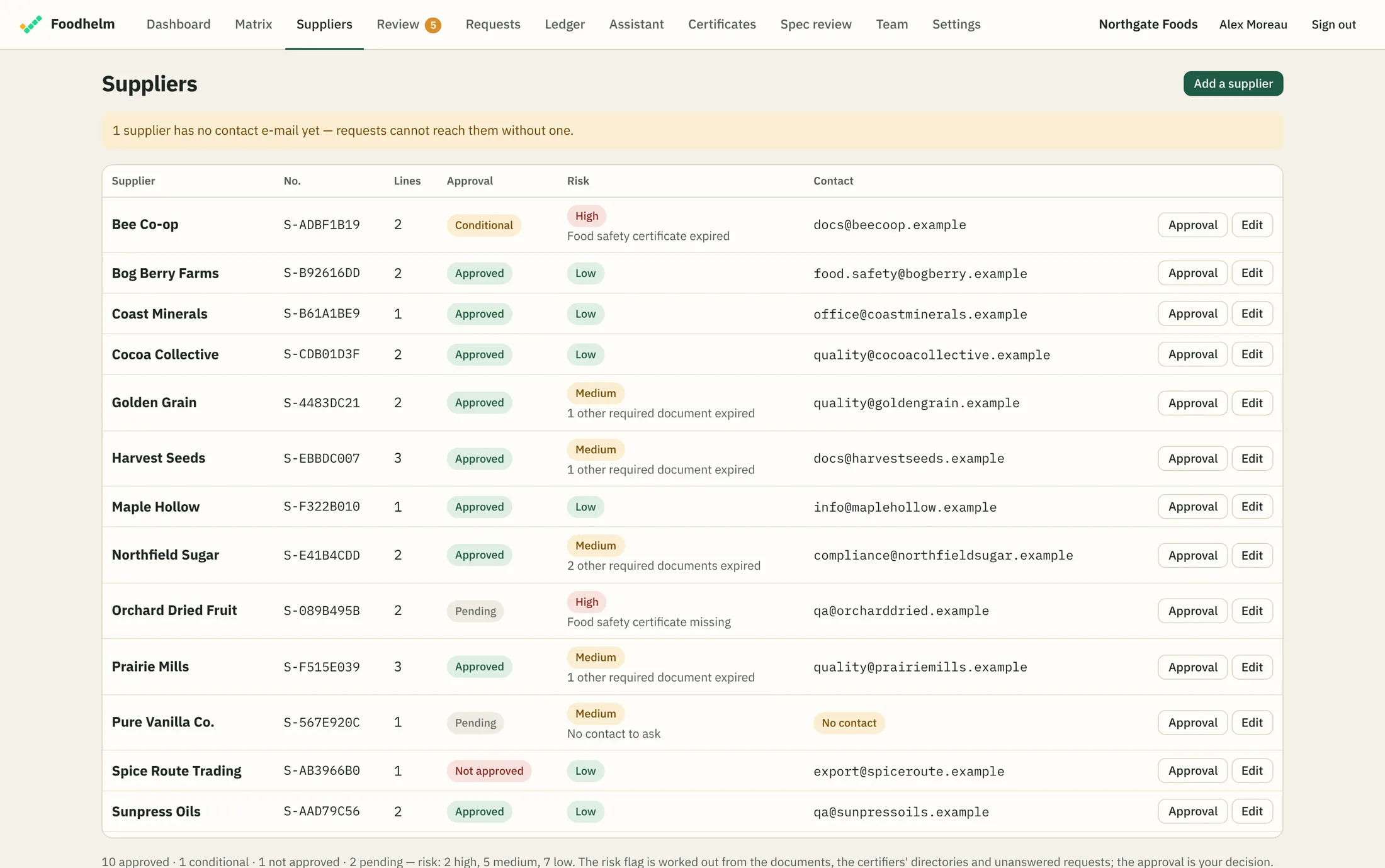
Every supplier carries an approval status that a named person decides, beside a risk flag worked out from the records.
- Food safety certificate expired
- Certifier's directory shows another date
- Request unanswered after two follow-ups
A decision with a name on it
Approved, conditional or not approved. The status is a person's decision, kept with who made it and when, and its history stays.
- Conditions and refusals need a note, so the reason is on the record.
- A date to look again can be set with each approval.
- Approving against a high flag needs a note too.
A risk flag that explains itself
Low, medium or high. It is never typed in. It is worked out from what Foodhelm already holds, and it lists its reasons.
- High: a required food-safety certificate is expired or missing, or a certifier's directory says a certificate is not valid.
- Medium: a directory disagrees or does not list the certificate, a request was escalated, another required document expired, or there is no contact to ask.
- Low: none of these.
- HighFood safety certificate expired
- MediumRequest escalated after two follow-ups
- LowEvery required document on file
The annual specification review
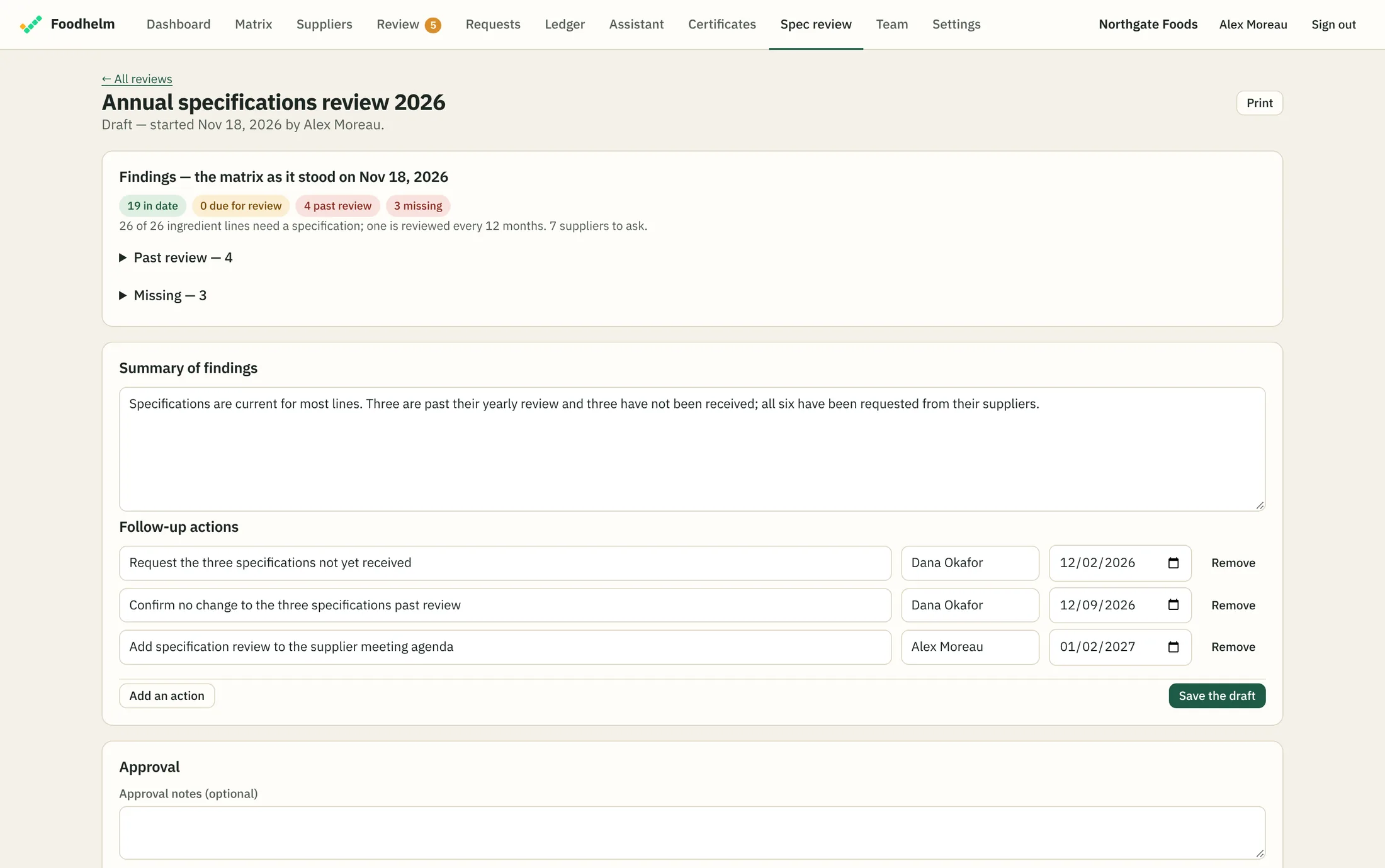
Once a year the state of every specification is captured as it stands, with a summary, follow-up actions and an administrator's approval.
- Findings are a snapshot. Later changes to the matrix do not move them.
- Actions carry an owner and a date.
- An approved review is kept exactly as approved, and prints cleanly for an auditor.
vendors and 166 manufacturing sites sit on Stephano Group's matrix, each with its documents, requests and decisions in one place.
The rest of the platform
The matrix
Every ingredient from every supplier, and the documents each one needs, built from what you buy.
How the matrix worksSupplier requests
One e-mail per supplier each morning from your own mailbox, with follow-ups and escalation.
How requests workDocument reading
Each reply is read: what it is, who holds it, when it expires and which lines it covers.
How reading worksCertificate checks
Kosher, organic, non-GMO and food-safety certificates confirmed at their certifiers' directories.
How checks workApproval and risk
A named person's approval for each supplier beside a risk flag, and the annual specification review.
How approval worksThe assistant
Questions in plain words, answered from your own records. It reads, and changes nothing.
How the assistant worksSee it on your own suppliers in 30 days
Every plant starts with a pilot on its own supplier list, measured the same way Stephano's results were.
- Week 1
Your matrix, live
Built from your ingredient and supplier list or your ERP. Your document rules are set with you and your QA mailbox is connected.
- Weeks 2 to 4
Suppliers answer
Requests and follow-ups go out each morning. What suppliers send is read and waits in Review for your QA team.
- Day 30
The count, again
Outstanding documents are counted by the same rule as on day one. You see the difference and decide.